



PPE detection to support your HSE teams
Context. Video feeds from industrial zones with different equipment requirements and observation conditions.
Illustrated workflow. Equipment detection, person tracking, zone rules, events and reports. The examples include high-visibility vest detection.
Tailored support. We help you adapt image capture, zones, and thresholds to your equipment and HSE procedures to prepare monitoring that supports your teams.
Explore our computer vision work and our camera-based PPE detection solution.
PPE compliance in industrial safety follows the HSE procedures of each zone and activity. Continuous video monitoring aims to give field teams contextualized events and useful information for prevention. For the audit and continuous-proof angle, see also our PPE compliance between audits guide and the Safety & PPE solution.
Each site has its own equipment, lighting conditions, and movement patterns. The project takes these characteristics into account to connect events with your teams’ compliance rules: zone, time, and criticality.
From video signal to qualified incident
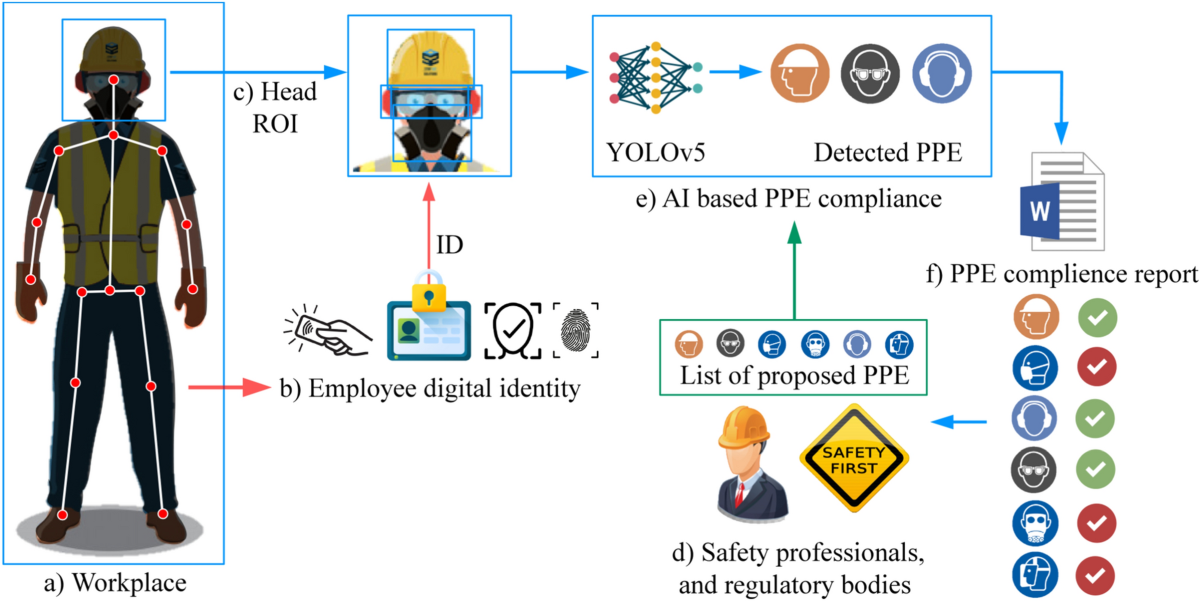
The pipeline relies on a structured perception chain: PPE detection, temporal tracking of people, zone-rule application, then event and report generation. The goal is to turn visual observations into qualified incidents and consolidated indicators usable for reporting and audit.
Parameters (zones, thresholds, escalation rules) can be tuned to reflect site constraints and expected tolerance, producing a stable, actionable, audit-ready signal.
Monitoring equipment use against your HSE criteria
Compliance criteria can include equipment positioning, fastening, and complete wear. Distinguishing correct from incorrect wear adds context to the events presented to HSE teams.
Zone rules and proportional alerts
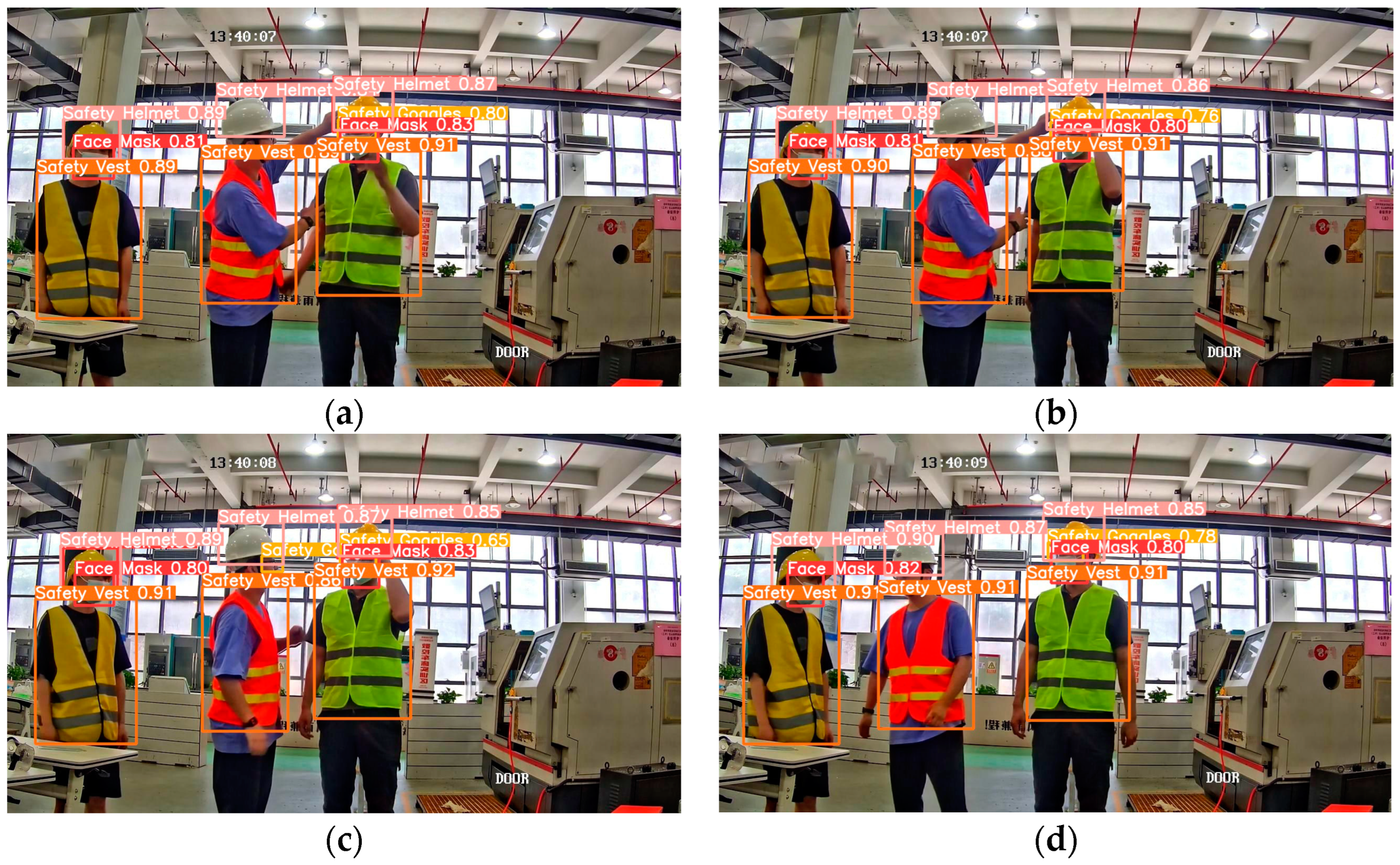
Zone rules connect each observation with its context: required equipment, tolerance duration, and confidence threshold. They help qualify events and prepare alerts suited to site procedures.
The aim is to focus team attention on relevant events, with targeted alerts integrated into their routines.
Consolidated supervision and reporting
Supervision relies on consolidated reporting for analysis and continuous improvement. A dashboard groups incidents by zone, period, and PPE type, highlighting trends and recurrence. This links compliance to concrete actions—signage adjustments, targeted reminders, circulation changes, or procedure updates—aiming for measurable, auditable follow-up.
Operational impact
At ARCY, the expected impact is operational: reduce risky situations, make compliance measurable, and provide steering support for safety leaders. A continuous approach also distinguishes isolated deviations from recurring issues, helping prioritize corrective actions.